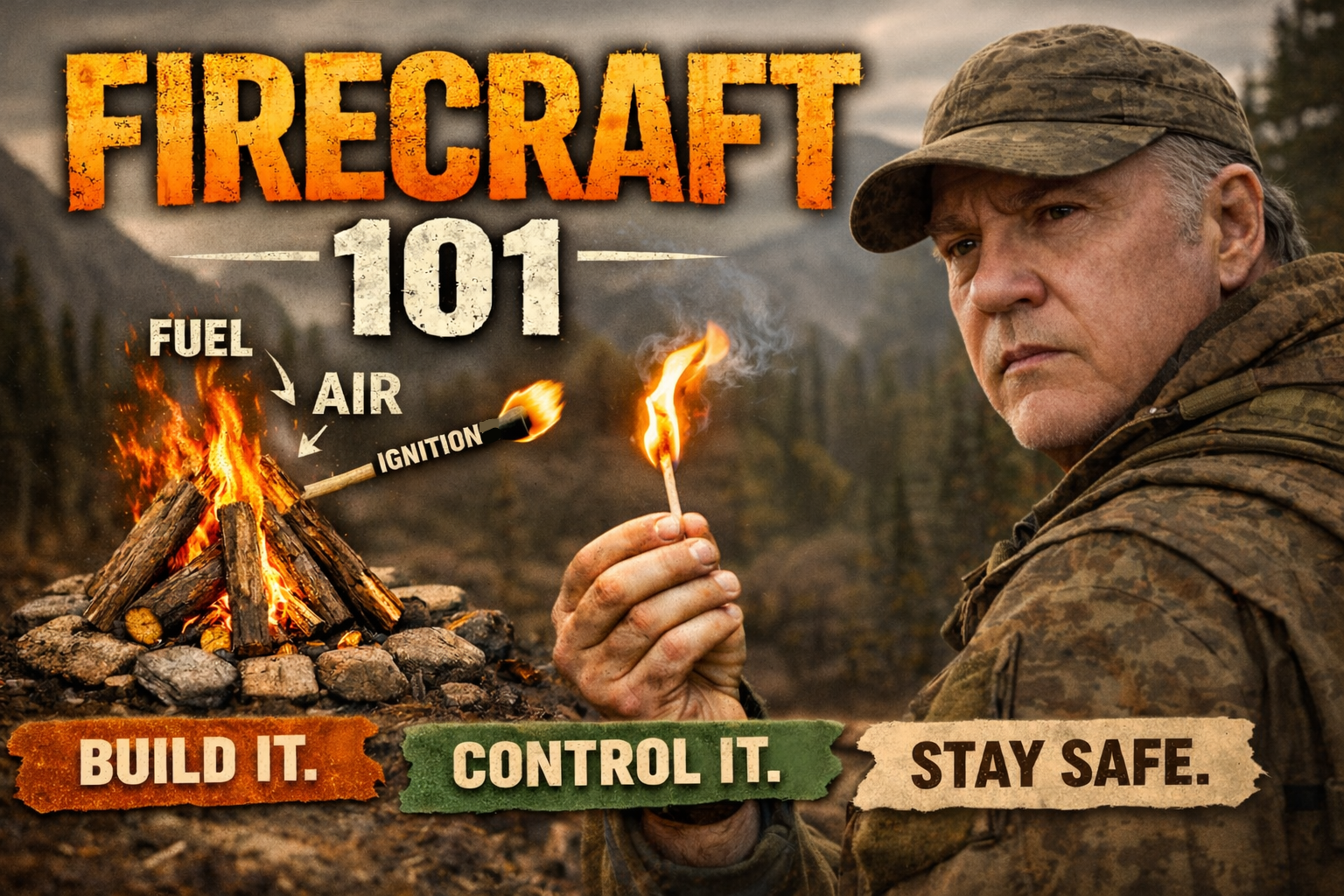
The Basics of Building, Managing, and Respecting Fire
By OG Ranger | Heritage Field Corps
Fire is one of the oldest tools known to man. It cooks our food, warms our camp, purifies our water, and lifts morale when the sun drops behind the ridge. But fire is also unforgiving. It demands respect, understanding, and discipline.
Firecraft 101 is about mastering the fundamentals — safety, science, structure, and purpose. Whether you’re brand new to the outdoors or refining your field skills, this guide will help you build fire the right way.
At Heritage Field Corps, we don’t play with fire. We manage it.
🔥 Fire Safety Comes First
Before you strike a match, you prepare the ground.
Clear the Area
- Create a 10-foot cleared radius around your fire site.
- Remove leaves, pine needles, and loose debris down to mineral soil.
- Make sure there are no low-hanging limbs directly overhead.
- Build a rock fire ring to contain coals.
- Keep extra firewood stacked far enough away to prevent accidental ignition.
Fire spreads through carelessness, not intention.
Have Safety Equipment Ready
Every fire kit should include:
- A shovel
- A bucket of water or sand
If you can’t extinguish it quickly, you shouldn’t light it.
Extinguishing Your Fire (The Right Way)
When the mission is complete:
- Stir the embers
- Sprinkle water
- Stir again
- Sprinkle again
Repeat until:
- No steam rises
- No embers glow
- The ground is cool to the touch
If it’s warm, it’s still alive.
Leave no trace. Leave no hazard.
The Science of Fire
Every fire depends on three elements:
Fuel + Air + Ignition
Picture a simple campfire diagram:
- The wood is your fuel.
- The airflow feeds oxygen into the flame.
- The match or spark is the ignition source.
Remove any one of these, and the fire dies.
Airflow is the most overlooked factor. How you stack your materials determines how efficiently your fire burns. Good firecraft isn’t about bigger flames — it’s about smarter structure.
Fire Building Materials
Every strong fire starts small.
Tinder
- Dry grass
- Birch bark
- Pine needles
- Cotton and petroleum jelly
- Commercial fire starters
Tinder catches the spark.
Kindling
- Pencil-sized sticks
- Small twigs
- Split wood shavings
Kindling builds the flame.
Fuel Wood
- Wrist-thick to forearm-thick logs
- Dry, seasoned hardwood preferred
Fuel sustains the burn.
You don’t throw logs on a spark. You build it up with patience.
Calm is a skill — even in firecraft.
🔥 Types of Fires and Their Uses
Different fires serve different missions. A skilled outdoorsman chooses structure based on need, weather, and available fuel.
1️⃣ Teepee Fire
Use: Quick cooking and immediate warmth
Structure: Cone-shaped logs arranged vertically
The classic campfire. Logs lean inward forming a cone, with tinder and kindling in the center.
Why it works:
The shape creates a chimney effect. Heat rises through the center, pulling oxygen from below. It burns hot and fast — excellent for boiling water or getting a larger fire started.
Best for: Fast heat, short tasks, starting other fire builds.
2️⃣ Log Cabin Fire
Use: Long-lasting heat and steady cooking
Structure: Logs stacked in alternating square layers
Built like a small cabin — sturdy and balanced.
Why it works:
The square shape allows consistent airflow while maintaining structure. It burns evenly and radiates heat well.
Best for: Evening campfires, steady warmth, cooking over time.
3️⃣ A-Frame Fire
Use: Beginner-friendly, small controlled fires
Structure: Three sticks arranged like an “A”
Simple and easy to ignite.
Why it works:
Provides controlled airflow and manageable flame size. Not built for high heat, but great for practice and small tasks.
4️⃣ Platform Fire (Upside-Down Pyramid)
Use: Excellent cooking base
Structure: Large logs stacked bottom-up; fire lit on top
This is a top-down burn method.
Why it works:
The fire burns downward through layers, producing a steady coal bed. It creates an even cooking surface and produces less smoke.
Best for: Campfire grates, pots, and multi-dish cooking.
5️⃣ Star Fire
Use: Conserving wood on long nights
Structure: Logs arranged like spokes of a wheel
Why it works:
As the ends burn, you push logs inward. It requires minimal wood and steady adjustment.
Best for: Cold nights when resources are limited.
6️⃣ Reflector Fire
Use: Maximizing heat direction
Structure: Fire built against a reflective surface (rock wall, stacked logs, foil barrier)
Why it works:
The reflector bounces radiant heat toward you — ideal in cold or windy conditions.
Best for: Winter camps, survival shelters.
7️⃣ Pyramid Fire
Use: Long-lasting, low-maintenance burn
Structure: Larger logs at base, smaller on top
Lit from the top down.
Why it works:
Controlled downward burn conserves fuel and reduces smoke.
Best for: Extended camp stays.
8️⃣ Lean-To Fire
Use: Windy conditions
Structure: Kindling leaned against a large base log
Why it works:
The larger log shields wind while allowing controlled ignition underneath.
Best for: Bad weather starts.
9️⃣ Candle Fire
Use: Small tasks, light cooking
Structure: Small, contained flame
Ideal when you only need minimal heat.
🔟 Bonfire
Use: Large gatherings, signaling
Structure: Large vertical stacking
Why it works:
Rapid airflow produces intense heat and flame.
Use responsibly. Large fires demand large discipline.
1️⃣1️⃣ Trench Fire
Use: Cooking stability
Structure: Fire built within a dug trench
Protects flame from wind and supports cookware.
1️⃣2️⃣ Dakota Fire Hole
Use: Low smoke, stealth cooking
Structure: Two connected underground holes
One hole contains the fire. The second acts as an air intake.
Why it works:
Air channels underground into the flame, creating efficient combustion with minimal visible smoke.
Best for: Survival situations, discreet camps.
🔥 Final Thoughts from OG Ranger
Fire is not just heat.
It’s discipline.
It’s preparation.
It’s control.
When you understand the science, respect the safety, and choose the right structure, fire becomes a powerful ally instead of a dangerous liability.
At Heritage Field Corps, we believe skills build confidence. And confidence reduces fear.
Master the basics. Practice often. Stay calm.
Because calm is a skill.
If this article helped you, stay tuned — I’ll be demonstrating these fire structures step-by-step in an upcoming OGRanger YouTube episode.
Stay sharp. Stay steady. 🔥
Leave a Reply